
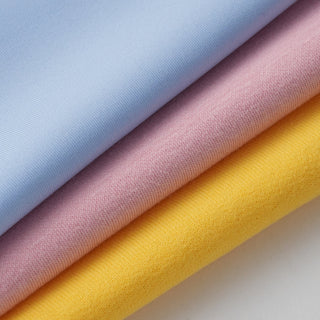
French terry fabric has become a staple in modern wardrobes, bridging the gap between comfort and style. With its soft loops on the inside and smooth, flat surface on the outside, it’s a go-to for hoodies, sweatshirts, joggers, and all year round pieces. If you’ve ever wondered what is French terry fabric, is French terry 100% cotton, or whats the difference between French Terry Vs Fleece, this guide will give you the answers.

What is French Terry Fabric?
French terry is a knit fabric with soft, looped piles on one side and a smooth surface on the other. This makes it highly breathable, absorbent, and comfortable against the skin. Unlike fleece, which has a brushed interior, French terry retains its looped texture, making it lighter and more versatile for year-round wear.
French terry is often chosen for loungewear and casual wear because it balances softness with structure, offering comfort without feeling too heavy.
The origins of French terry can be traced back to the mid-1800s. The term “terry” comes from the French verb tirer, meaning to pull. Early textile manufacturers developed a method where long loops of silk were pulled through dense woven cloth to create what we now call terrycloth. Over time, this technique evolved to feature loops only on one side of the fabric. This became known as French terry a fabric with a soft, smooth surface on one side and absorbent loops on the other, offering the perfect balance of comfort and versatility.
4 Key Characteristics of French Terry Fabric
- Breathability – Keeps air flowing, making it suitable for both warm and cool weather.
- Absorbency – The looped back absorbs moisture, ideal for sweatshirts and post-workout wear.
- Soft Comfort – Gentle against the skin, making it popular for everyday wear.
- Versatility – Works well across hoodies, sweatpants, t-shirts, and jackets.
How is French Terry Fabric Made?
French terry is created using a knitting process that forms loops on one side of the fabric. These loops can be left uncut (traditional French terry) or brushed for other finishes. Cotton or Organic Cotton is the most common fiber used, but blends with more sustainable options are also available, Sorona, Bamboo, Tencel, Hemp or spandex add durability and stretch.
Why Choose French Terry Fabric
French terry is often described as a “year-round fabric” because of its adaptability. It’s lighter than fleece but cozier than jersey, making it ideal for layering pieces. Brands love it for French terry hoodies, joggers, and French terry t-shirts because it can work for summer or winter depending on weight and blend.
6 Clothing & Garment Uses of French Terry Fabric
- Hoodies & Sweatshirts – The classic French terry hoodie is both comfortable and durable. See the best hoodie and sweatshirt fabric.
- Joggers & Sweatpants – Soft interior loops make them perfect for lounging or light activity.
- T-Shirts – Lightweight French terry t-shirts are breathable and casual.
- Shorts – A cooler alternative for summer loungewear.
- Light Jackets – Great for layering in spring or autumn.
- Loungewear Sets – Matching French terry sets are on-trend for both home and casual outings.
French Terry vs Fleece
When comparing French terry vs fleece, the biggest difference is weight and warmth. Fleece has a brushed interior that traps heat, making it warmer and bulkier great for cold winter wear. French terry, on the other hand, keeps its looped texture inside, which makes it lighter, more breathable, and suitable for year-round wear. Learn more about which to use.


French Terry vs Terry Cloth
Though they share a name, French terry and terry cloth serve very different purposes. French terry is a knit fabric with loops on one side and a smooth surface on the other. Its loops are shorter and denser, giving it a lighter feel that makes it breathable and versatile for everyday wear like hoodies, joggers, and sweatshirts.
Terry cloth, on the other hand, is knit with longer, looser loops that make it plusher and more absorbent. It can be made with loops on both sides, or just one sided. While terry cloth is still widely used for towels and robes, it has also become popular in apparel especially summer clothing, resortwear, and relaxed loungewear pieces.


Comparison: French Terry vs Fleece vs Terry Cloth
| Fabric | Construction | Feel & Texture | Warmth | Absorbency | Best Uses |
| French Terry | Knit, loops on one side, smooth on the other | Smooth outside, looped inside, soft but not plush | Medium (all-season, breathable) | Moderate (absorbs some moisture, dries fast) | Hoodies, joggers, sweatshirts, tees, loungewear |
| Fleece | Knit, loops brushed to create fuzzy pile (single or double-sided) | Fluffy, cozy, thicker, brushed inside/outside | High (traps heat, great for cold weather) | Low (not designed to absorb water) | Winter hoodies, jackets, sweatshirts, cold-weather wear |
| Terry Cloth | Knit with loops on both sides (or sometimes one side) | Plush, thick, soft, towel-like texture | Medium (depends on weight, more plush than French terry) | High (designed for absorbency) | Towels, robes, resortwear, shorts, casual dresses |

How to Care for French Terry Fabric
- Wash in Cold Water – Prevents shrinkage and keeps fabric fibers strong.
- Use Gentle Detergent – Protects natural fibers from harsh chemicals.
- Turn Inside Out – Helps reduce pilling and preserve softness.
- Air Dry or Tumble Low – Keeps loops intact and reduces wear.
- Avoid High Heat – High temperatures can damage elasticity in blended fabrics.
- Store Folded – Prevents stretching that can happen when hung.
Where to Buy French Terry Fabric & Buying Tips
French terry is widely available for both sewists and fashion brands. You can find French terry by the yard at specialty fabric shops, online retailers, or through French terry wholesale suppliers.
Buying tips:
- Ask if the French terry is 100% cotton or a blend (blends may offer stretch or performance).
- Check weight for your project requirements.
- Ask if there are matching ribs available.
- Order swatches before bulk purchasing.
What Types of French Terry Fabric Does Yardblox Offer?
At Yardblox, we carry a broad range of French terry fabrics designed to meet different garment needs, sustainability goals, and performance requirements.
Fiber Options
- 100% Cotton French Terry – A natural choice with breathability and softness, perfect for everyday loungewear and basics.
- Organic Cotton French Terry – Sustainably grown cotton that’s eco-friendly and ideal for sustainable and eco-friendly fashion brands.
- Cotton Blends – Cotton mixed with fibers like polyester, Sorona, Bamboo, Tencel, Hemp or spandex for added durability, softness, stretch, or shape retention.
- Bamboo French Terry – Lightweight and silky with natural antimicrobial properties, often chosen for activewear and athleisure.
Weight Categories
French terry fabric is available in different weights (measured in gsm – grams per square meter), allowing you to choose based on seasonality and garment type:
- Mediumweight (171 – 230 gsm) – Suitable for lightweight hoodies, tees, and layering pieces.
- Medium-Heavy Weight (231 – 340 gsm) – The most versatile range, great for sweatshirts, joggers, and casual sets.
- Heavyweight (341 – 450 gsm) – Provides warmth and structure, ideal for outerwear-style hoodies, premium sweatpants, and jackets.
- Very Heavyweight (450 gsm and above) – Substantial and durable, used for oversized hoodies, structured loungewear, and winter garments.


